Bangkok · Chiang-mai · Phuket · Pattaya · Thailand
The Anti-Influencer Guide to Thailand: How to Actually Enjoy the Land of Smiles
Tired of clickbait horror stories and micro-outrage? From accepting dual pricing and spotting the best plastic-stool street food to mastering the magical power of a smile, here is how to experience Thailand as a gracious guest.
Spend five minutes on travel social media and you will encounter a bizarre alternate universe. Creators with selfie sticks furiously pacing Bangkok alleys, shouting about "MASSIVE SCAMS" because a tuk-tuk ride cost 150 Baht instead of 100, or doom-mongering about ice cubes and street vendors.
These algorithmically engineered panic reels thrive on drama, grievance, and fear. But if you land in Thailand carrying that defensive, suspicious energy, you will completely miss the soul of one of the most hospitable, vibrant, and rewarding countries on earth. Here is the antidote: an honest, grounded guide to letting go of the noise, embracing the culture, and traveling Thailand like a welcome guest rather than an entitled consumer.
1. Tuning Out the Influencer Rage-Bait
Social media algorithms do not reward nuanced cultural appreciation; they reward shock value. An influencer who films a joyful, incident-free 10-day trip gets 400 views. An influencer who titles a video "DON'T GO TO THAILAND! (SCAMMED & STRANDED)" because their Bolt driver got caught in Sukhumvit rush-hour traffic gets 2 million views.
Thailand remains among the safest, most welcoming travel destinations in the world. Violent crime against tourists is extraordinarily low, locals will go out of their way to help you find a lost wallet or guide you to the right train, and street life is remarkably peaceful. Walking through Bangkok or Chiang Mai with paranoia in your eyes is like wearing sunglasses indoors: you are only dimming your own view.
2. The "Dual Pricing" Reality Check: So What?
One of the most frequent influencer complaints revolves around dual pricing (the so-called "Farang Tax"). You visit a National Park, historical ruin, or state-run museum and notice that Thai nationals pay 40 THB while foreign tourists pay 200–300 THB.
Let’s break this down with basic economic reality:
- Tax contributions: Thai citizens fund the infrastructure, roads, forestry staff, and municipal upkeep year-round through their daily taxes in a developing economy where the median daily minimum wage is roughly 350–400 THB ($10–$12 USD).
- Global scale: 200 THB is roughly $5.50 USD, €5.00, or £4.30. In London, Paris, or New York, entry to a single landmark museum often exceeds $25 to $35 USD.
- Conservation support: Your entrance fee helps protect Thailand’s pristine coral reefs, rainforest reserves, and world-heritage archeological parks.
You spent hundreds—or thousands—of dollars on flights and hotels. Allowing a $4 difference on a park ticket to poison your mood is the definition of losing the plot. Consider it a modest, respectful contribution to the beautiful country hosting your holiday.
3. The Magic of a Genuine Smile (It’s a Mirror)
Thailand is famously called the Land of Smiles (Mueang Yim), but many visitors misunderstand how it works. A Thai smile is not passive servitude; it is a profound cultural philosophy of harmony, emotional regulation, and interpersonal warmth.
In Thailand, human interaction is a mirror. If you approach a shopkeeper, taxi driver, or hotel clerk with a stern scowl, tense posture, and demanding tone, you will be met with polite withdrawal and quiet resistance. But when you relax your shoulders, make warm eye contact, and offer a genuine, friendly smile, the warmth returned to you is instantaneous.
The Golden Rule of Jai Yen (ใจเย็น): "Cool heart." In Thai culture, raising your voice, yelling, or showing aggressive anger causes everyone involved to lose face (Sia Na). Once anger enters a conversation, the problem stops being solved. Keep your cool, smile, and speak gently—you will get tenfold better results every single time.
4. How to Spot Elite Street Food Like a Local
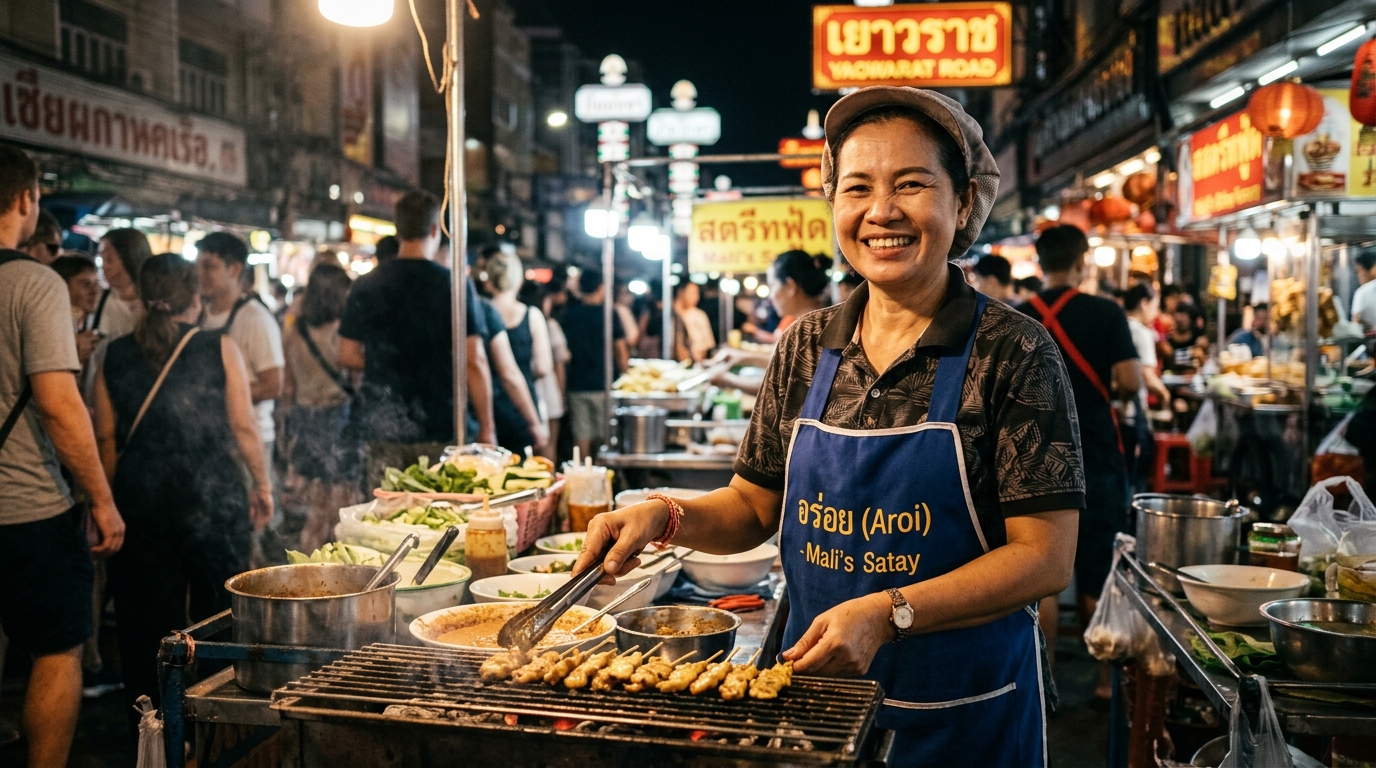
Forget Michelin stickers or hyper-curated Instagram lists. Thailand’s greatest culinary treasures are found on busy street corners and market alleys. Spotting a world-class food vendor comes down to four simple visual cues:
The Plastic Stool Index
If the stall has flimsy red or blue plastic chairs packed with local office workers, motorbike taxi drivers, and neighborhood families, sit down immediately. Locals vote with their feet and their baht every single lunch hour.
High Ingredient Turnover
Busy stalls churn through fresh herbs, noodles, and meats in hours. Nothing sits under heat lamps. A roaring wok with roaring customer turnover guarantees hot, safe, exceptionally fresh food.
The One-Dish Master
Be cautious of tourist traps with 120-item laminate menus spanning pizza, curry, and burgers. The best street cooks in Thailand are hyper-specialists who have cooked only Pad Kra Pao, Hainanese Chicken Rice, or Boat Noodles for 35 straight years.
The Tube Ice Truth
Influencers love to warn about ice. In reality, commercial tubular ice with a hole through the center is manufactured in licensed purification facilities and delivered fresh daily across Thai cities. Enjoy your iced Thai milk tea without anxiety!
5. Essential Survival Phrases Spoken with Heart
You don’t need to be fluent in Thai to show immense respect. Learning just a handful of phrases—delivered with a smile and the correct gender particle (Khrap for men, Kha for women)—will delight vendors and drivers everywhere you go.
| Phrase (Phonetic) | Thai Script | Meaning & Context |
|---|---|---|
| Sawatdee khrap / kha | สวัสดีครับ / ค่ะ | Universal hello, good day, and welcome. |
| Khop khun khrap / kha | ขอบคุณครับ / ค่ะ | Thank you very much. |
| Mai phet / Phet nit noi | ไม่เผ็ด / เผ็ดนิดหน่อย | "Not spicy" / "Just a little spicy" (lifesaver when ordering street food). |
| Leo sai / Leo khwa | เลี้ยวซ้าย / เลี้ยวขวา | "Turn left" / "Turn right" (handy for taxi and tuk-tuk navigation). |
| Trong pai | ตรงไป | "Go straight ahead." |
| Tao rai khrap / kha? | เท่าไหร่ครับ / ค่ะ | "How much is this?" |
| Aroy mak! | อร่อยมาก | "Delicious!" (Say this to your cook and watch their face light up with pure joy). |
| Mai pen rai | ไม่เป็นไร | "No worries / Never mind / You're welcome." The national motto of peace of mind. |
6. Respect & Cultural Etiquette: Being a Gracious Guest
Thai culture is deeply rooted in Theravada Buddhism, respect for community elders, and familial harmony. Observing a few simple cultural boundaries shows that you honor the country you are visiting:
- Temple dress codes (Wat): Ensure shoulders and knees are covered before stepping into sacred temple compounds. Always remove your shoes before stepping across the threshold into prayer halls, and step over the raised wooden doorsill (never stand on it).
- The head is sacred, the feet are low: The head is considered the highest, most spiritual part of the body—never touch someone’s head or ruffled hair, even a cute child. The soles of the feet are spiritually lowest—never point your feet at monks, Buddha statues, or other people. When sitting on the floor in a temple, tuck your feet behind you in the mermaid posture.
- Reverence for Monks: Monks hold a deeply honored position. On the BTS Skytrain and MRT subway, give up designated priority seats for monks. Women should never touch a monk or hand items directly to them (place offerings on a cloth or tray provided).
- The Wai (ไหว้): Pressing your palms together near chest level with a slight head bow is the traditional Thai greeting. While tourists aren't expected to wai cashiers or taxi drivers, receiving or returning a gentle wai is a moment of mutual dignity.
7. Tipping Culture in Thailand: Demystified & Nuanced
Unlike North America, Thailand does not have an aggressive, mandatory tipping culture where iPad screens demand 20% to 30% for handing you a bottle of water. However, thoughtful tipping is widespread, highly appreciated, and directly supports hardworking service workers.
| Setting | Typical Practice | Helpful Rule of Thumb |
|---|---|---|
| Traditional Thai Massage & Spas | 50 to 100 THB per hour | Hand the tip directly to your therapist with both hands after the session; they work physically demanding shifts. |
| Street Food Stalls & Food Courts | No tip expected / Round up change | Drop small loose coins (10–20 THB) into the tip jar if there is one on the counter. |
| Casual Sit-Down Restaurants | Round up to nearest 50 or 100 THB | If the bill is 460 THB, leave 500 THB. Leaving 20 to 50 THB cash on the table is standard. |
| Upscale Restaurants & Hotels | Check bill for +10% SC | If 10% Service Charge + 7% VAT are already added to your bill, extra tipping is entirely optional. |
| Taxis & Rideshare (Grab / Bolt) | Round up to nearest 20 or 50 THB | If meter reads 85 THB, hand over 100 THB and say "Mai tong torn khrap/kha" (keep the change). |
8. The Ultimate Mindset Shift: Travel as a Guest
At its core, loving Thailand requires embracing three beautiful concepts that define the rhythm of local life:
- Sanuk (สนุก): Finding fun and lighthearted joy in everyday moments, whether navigating a rainy night market or laughing over a mispronounced dish.
- Sabai (สบาย): Cultivating an inner sense of ease, comfort, and physical and emotional relaxation.
- Mai Pen Rai (ไม่เป็นไร): The quiet understanding that things don't always go to plan, traffic happens, rain falls, and it is all going to be completely okay.
When you step away from the toxic grievance reels of social media and approach Thailand with curiosity, humility, and a generous smile, you don't just visit the country—you experience its genuine magic.
Keep exploring
About MyThai Editorial Team
Thailand-focused editors committed to practical, respectful and verifiable travel guidance.