Hat-yai · Songkhla
Complete Guide to Hat Yai Fried Chicken — History, Tips & Best Shops
Everything about Hat Yai fried chicken — from its southern Thai Muslim origins and unique spice blend to the best local shops and how to eat like a Hat Yai resident.
Where Hat Yai Fried Chicken Comes From
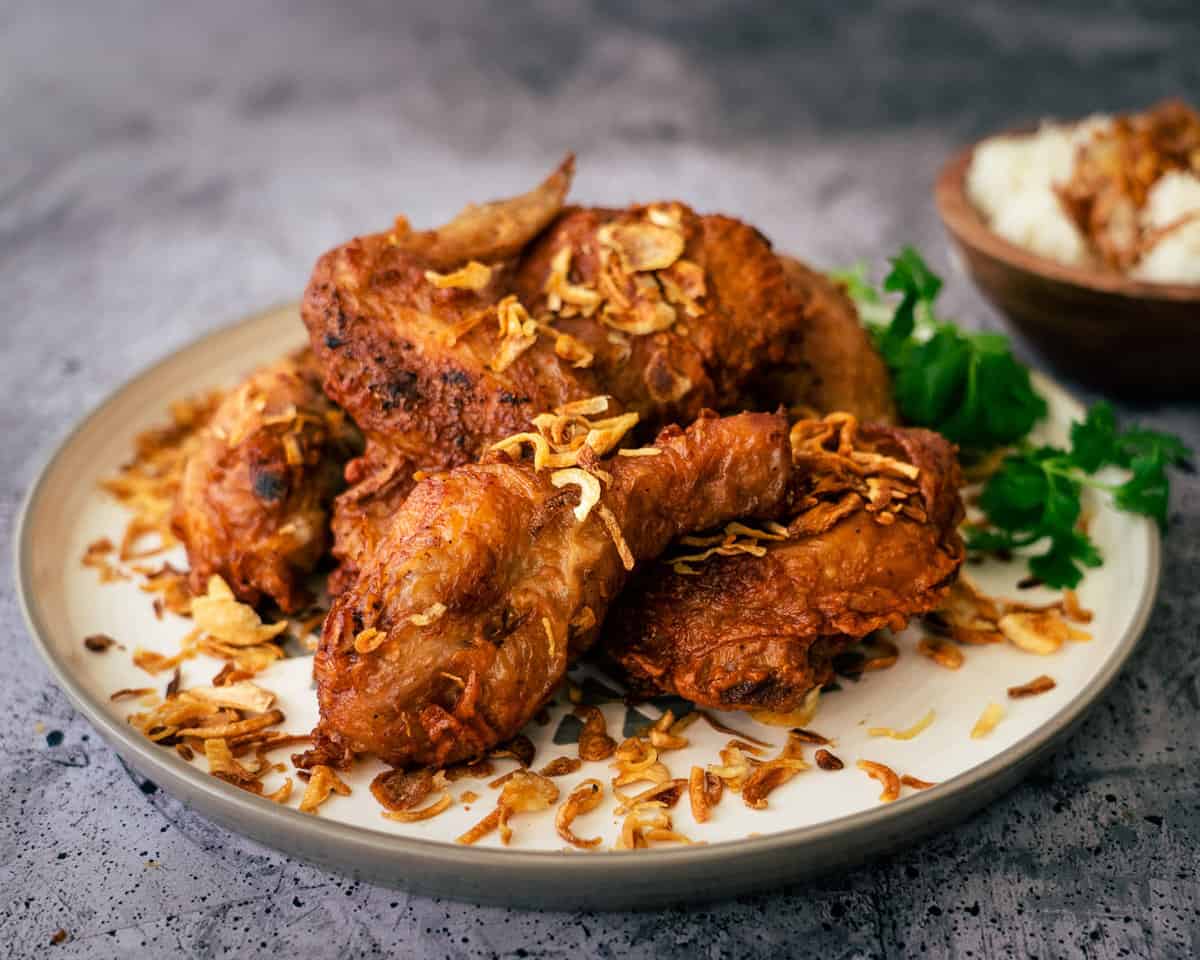
Hat Yai fried chicken (ไก่ทอดหาดใหญ่) is not just another fried chicken. It is a culinary institution born in the Muslim communities of Songkhla province, southern Thailand, more than four decades ago.
The story begins in the 1980s at a small roadside stall in downtown Hat Yai city. A Muslim family, drawing on generations of spice-blending knowledge from the Malay peninsula, began frying chicken with a distinctive marinade that nobody else was using at the time. Word spread fast. By the 1990s, Hat Yai fried chicken had become synonymous with the city itself — travellers from across southern Thailand and Malaysia would stop in Hat Yai specifically to eat it.
What set it apart was the marriage of southern Thai Muslim culinary tradition with the universal appeal of perfectly fried chicken. The influence is distinctly cross-cultural: the spice blend borrows from Malay and South Indian traditions, the frying technique from Chinese-Thai street food culture, and the sticky rice accompaniment is pure southern Thai.
The Spice Blend
The marinade is everything. Unlike Western fried chicken which relies on buttermilk and flour dredge, or Korean fried chicken with its gochujang glaze, Hat Yai fried chicken gets its character from a dry spice rub that penetrates deep into the meat.
The core spices are:
- Turmeric (khamin) — gives the chicken its signature golden-yellow hue and earthy depth
- Cumin (yira) — warm, aromatic, unmistakably southern
- Garlic (krathiam) — generous amounts, crushed into a paste
- White pepper (prik thai khao) — cleaner and sharper than black pepper
- Coriander root (rak pak chi) — the secret weapon of Thai marinades, pungent and herbal
- Salt and a touch of sugar — for balance and caramelisation during frying
Chicken pieces are coated in this mixture and left to marinate for a minimum of four hours — the best shops do six to eight. This is not a surface treatment; the spices work their way into the meat fibres. When the chicken hits hot oil, the turmeric caramelises instantly, creating that unmistakable golden crust.
The Frying Technique
Hat Yai fried chicken is deep-fried — not pressure-fried, not shallow-fried. The oil temperature sits around 170-180 degrees Celsius. Each piece goes in naked (no batter, no flour coating) and emerges after 12-15 minutes with a shatteringly crisp skin that crackles when you bite into it.
The absence of batter is deliberate. A flour coating would steam the skin underneath. Frying without batter lets the skin render its own fat, becoming impossibly crisp while protecting the meat inside from drying out. The result is a contrast that is hard to achieve: glass-crisp exterior, juicy interior.
After frying, the chicken rests briefly on a rack — never on paper towels, which would create steam and soften the crust.
The Crispy Shallots
No discussion of Hat Yai fried chicken is complete without talking about the fried shallots (hom jiao). Thinly sliced red shallots are fried separately in the same oil until golden brown and intensely aromatic. They are scooped out, drained, and scattered generously over every plate of chicken.
These are not a garnish — they are an essential component. The sweetness of caramelised shallot, the crunch, and the way they cling to the sticky rice creates a texture combination that makes Hat Yai fried chicken immediately recognisable.
What Comes With It
A proper Hat Yai fried chicken set includes:
- 1-2 pieces of fried chicken — your choice of breast, thigh, drumstick, or wing
- Sticky rice (khao niao) — steamed in bamboo baskets, served warm and fragrant
- Crispy fried shallots (hom jiao) — golden, scattered on top
- Sweet chilli dipping sauce (nam jim kai) — sweet, tangy, with a slow-building heat
- Fresh cucumber slices and a wedge of lime — to cut through the richness
A full set costs 40-80 THB depending on the shop and how many pieces you order. Even at 80 baht, it is one of the best-value meals in Thailand.
Where to Eat the Best Hat Yai Fried Chicken
Jay Keng Fried Chicken
Restaurant · Hat YaiThe undisputed legend. Jay Keng has been operating for over 40 years on Niphat Uthit 2 Road in central Hat Yai. Their shallots are famous — fried to a deep amber, perfectly crisp, never bitter. The spice blend is slightly sweeter than competitors, with a more pronounced cumin note. Opens around 10am, often sells out by 2pm.
Decha Fried Chicken
Restaurant · Hat YaiThe challenger that many locals now prefer. Decha uses younger birds and a shorter fry at slightly lower temperature, which keeps the meat incredibly tender and juicy. The spice blend is bolder, with a pronounced garlic kick. Located near the railway station, making it a convenient stop for travellers.
Kim Yong Market
Restaurant · Hat YaiNot a single shop but a collection of stalls inside Hat Yai's most famous market. The advantage here is variety — you can try fried chicken from three or four different vendors in one visit. The market stalls tend to be cheaper (40-60 THB) and some use family recipes passed down three generations. Go in the morning for the freshest batches.
How to Eat Like a Hat Yai Local
Forget cutlery. The proper way to eat Hat Yai fried chicken:
- Pinch off a piece of sticky rice with your right hand — roll it into a small ball between your thumb and fingers.
- Dip the rice ball into the sweet chilli sauce — do not drown it, just coat it.
- Take a bite of the fried chicken, making sure to get some crispy shallots in the same mouthful.
- Alternate bites of chicken-rice-shallot with sips of cha yen (Thai iced tea) or a cold Singha beer if it is late afternoon.
The heat of the chicken, the sweet-spicy sauce, the crunch of shallots, and the chewy starch of sticky rice — it all works together. Do not overthink it.
Getting to Hat Yai
Hat Yai is southern Thailand's largest city and a major transport hub:
- Air: Hat Yai International Airport (HDY) has daily flights from Bangkok (1.5 hours), Chiang Mai, and Kuala Lumpur
- Train: The Southern Line from Bangkok Hua Lamphong takes 14-16 hours; sleeper berths available
- Bus: From Bangkok's Southern Bus Terminal, 12-14 hours; from Phuket, 6-7 hours
Once in Hat Yai, all the fried chicken shops listed above are within a 10-minute tuk-tuk or Grab ride from the city centre.
Beyond Fried Chicken
Hat Yai has one of Thailand's most interesting food scenes, shaped by its Chinese, Malay, and Muslim communities. While in town for the chicken, do not miss:
- Khao Yam — southern Thai rice salad with fresh herbs, toasted coconut, and budu fermented fish sauce
- Dim Sum — Hat Yai has an unexpectedly excellent dim sum scene, a legacy of its Chinese-Thai population
- Roti — flaky, buttery flatbread served with curry or sweet condensed milk, reflecting Malay-Muslim influence
- Fresh Gulf seafood — Hat Yai markets have excellent cheap seafood from the Gulf of Thailand
Keep exploring
About MyThai Editorial
Thailand travel experts