Chiang Mai
Chiang Mai neighbourhoods for food, nightlife and local culture
Chiang Mai neighbourhoods for food, nightlife and local culture works best with practical choices rather than a rushed checklist. This guide prioritises current information, flexibility and respect for local communities.
Understanding Chiang Mai’s neighbourhood character
Chiang Mai does not offer a single central scene; its energy moves among distinct quarters, each shaped by geography, history and the people who live there. When planning around food, nightlife and local culture, understanding the personality of each area helps you avoid rushed itineraries and lets you settle into a rhythm that feels natural. The Old City remains a daytime cultural anchor with early-closing eateries, while Nimmanhaemin hums after dark with contemporary kitchens and cocktail bars. The riverside and east-bank lanes provide a calmer backdrop for long dinners, and the Night Bazaar area caters overtly to visitors. Northward, Santitham preserves a working-local pulse that rewards those willing to walk a little further.
The Old City: temples, street eats and cultural calm
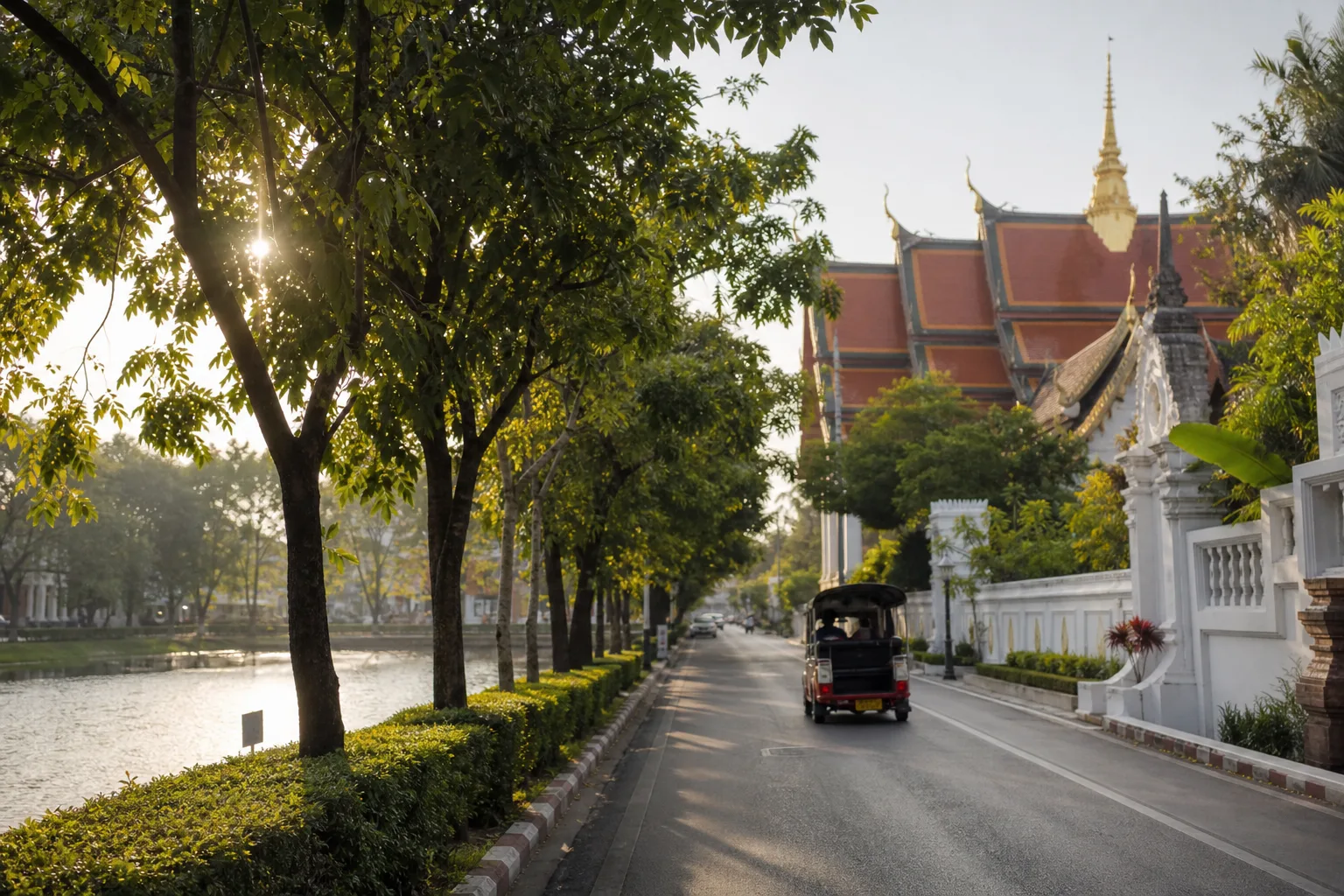
Within the moat, hundreds of food stalls, family-run curry shops and hole-in-the-wall noodle spots cluster near soi entrances and morning markets. Temple compounds often host evening food fairs, but these depend on Buddhist holidays and local announcements, so confirm schedules through official community boards rather than social media rumours. Because the Old City is still a lived-in sacred space, shorts and sleeveless tops that might feel acceptable on a hot afternoon stall are inappropriate around temple grounds even if you are only grabbing food nearby. Most vendors close by late evening, so treat the quarter as an early supper destination and then shift to other neighbourhoods for nightlife. Walking and cycling are easy, though some lanes become very dark after sunset; a small torch helps.
Nimmanhaemin: contemporary dining and creative nightlife
West of the moat, Nimmanhaemin and its side streets concentrate a design-conscious dining scene alongside speakeasies, live-music bars and late-night dessert cafés. The area attracts a mixed crowd of students, digital workers and travellers, which means English menus are common but prices trend higher than in purely local neighbourhoods. Sidewalks are generally present but not always even, so accessibility for wheelchairs or strollers varies by building. After midnight, the main road can feel hectic with traffic, and it is wise to use a metered ride-hailing service rather than walking unlit backstreets alone. Noise laws are enforced unevenly, yet keeping your own volume down in residential lanes shows respect and helps maintain goodwill with long-term residents.
The Night Bazaar and Chang Khlan: tourist-friendly after dark
East of the old moat, Chang Khlan Road transforms each evening into a covered market corridor with food court sections, grilled meat stalls and beer gardens set among souvenir stalls. The atmosphere is deliberately laid out for visitors, making it a predictable entry point if you are new to the city. Hygiene standards at open-air buffets can vary; choose stalls with high turnover and avoid pre-cooked seafood that has been sitting without temperature control. Bargaining is expected for goods but not for food, and a calm, smiling approach works better than confrontation. Pickpocketing can occur in dense pedestrian flows, so keep bags closed and valuables out of back pockets. Operating days shift during low season or heavy rain, so ask your accommodation for a recent update rather than relying on old guidebooks.
Santitham: local flavours and low-key evenings
North of the old city moat but still within reach by a short songthaew ride, Santitham feels like a residential district that happens to serve excellent local food rather than a destination designed for tourism. Here you will find moo kata (grilled pork buffets), university-side khao soi shops and simple pubs where live music is often in Thai. English is less widely spoken, so a translation app and patience go a long way. Many smaller eateries are cash-only, and the nearest ATMs can be a walk away, so carry small notes. The streets are generally safe, but the lack of tourist infrastructure means you should plan how to return to your accommodation before it gets too late, as songthaew availability drops after 10 p.m. in this quarter.
Riverside and Wat Ket: romantic dining and heritage
The eastern bank of the Ping River, particularly around Wat Ket, holds restored wooden houses that now serve as restaurants and low-lit wine bars with views of the water. The mood is quieter and more suitable for a deliberate dinner rather than bar-hopping. During the rainy season, certain riverside venues may suspend outdoor seating if the water level rises; check their official channels for weather-related closures. Dress respectfully even in the evening, as some dining rooms are attached to heritage buildings with cultural significance. The riverbank paths can be uneven and are not universally wheelchair-accessible, so call ahead if mobility is a concern. This area also rewards daytime wanderers: Chinese-style shophouses and a vibrant local wet market sit just behind the main river road.
Getting around and staying safe at night
Chiang Mai’s red songthaews, ride-hailing apps and tuk-tuks provide flexible transport, but each has quirks. Red trucks operate on shared routes and may not go exactly to your door; agree on the price before hopping in. Licensed ride-hailing drivers follow mapped routes and offer a more predictable fare, though cars can be scarce in the deepest sois. Avoid unmarked vehicles offering unsolicited rides, especially late at night. If walking between neighbourhoods, cross busy roads at designated lights and note that motorbikes often mount pavements. Pedestrian crossings are advisory, not a guarantee of safety. Wheelchair access is limited across older quarters, and few venues have step-free entrances; planning visits during daylight lets you assess ramps and dropped kerbs more easily.
Respectful behaviour and a final verification checklist
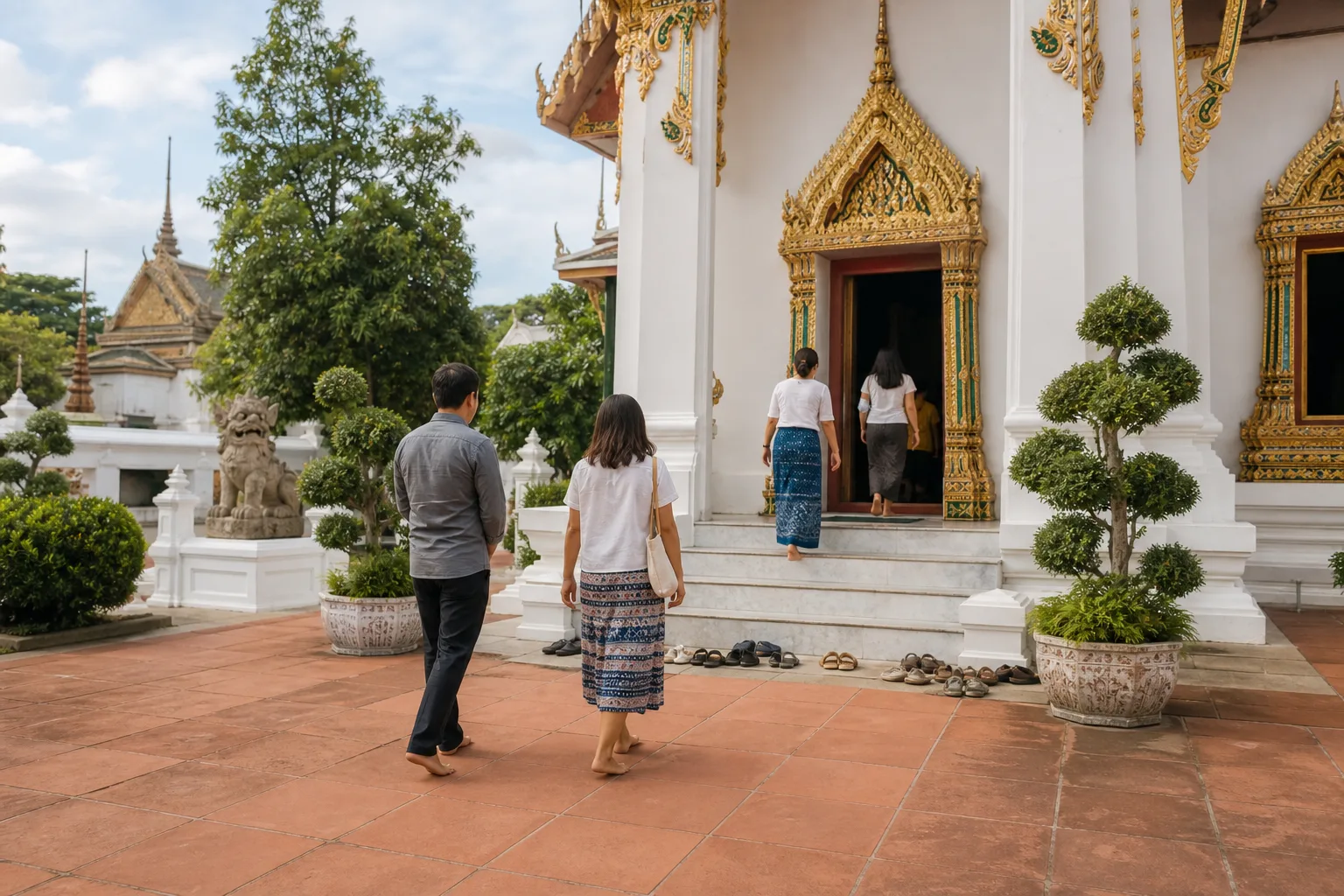
Chiang Mai is a city of layered traditions, and mindful conduct directly shapes the welcome you receive. Temple-adjacent areas require covered shoulders and knees; carry a light scarf for spontaneous stops. Remove shoes before entering private homes and some older shop-houses. Public drunkenness and loud behaviour attract police attention, and alcohol sales are legally restricted to specific hours outside religious holidays — times that change without broad notice. Never touch a monk or hand anything directly to them, especially if female. Because all operational details in this article can shift with seasons, festivals or ownership changes, always confirm opening status through official tourism authority pages or by calling the venue directly. A last-minute check saves frustration and keeps your experience fluid and respectful.
Keep exploring
About MyThai Editorial Team
Thailand-focused editors committed to practical, respectful and verifiable travel guidance.