Chiang Mai
First-time visitor's guide to Chiang Mai
First-time visitor's guide to Chiang Mai works best with practical choices rather than a rushed checklist. This guide prioritises current information, flexibility and respect for local communities.
Getting Your Bearings in the Old City and Beyond
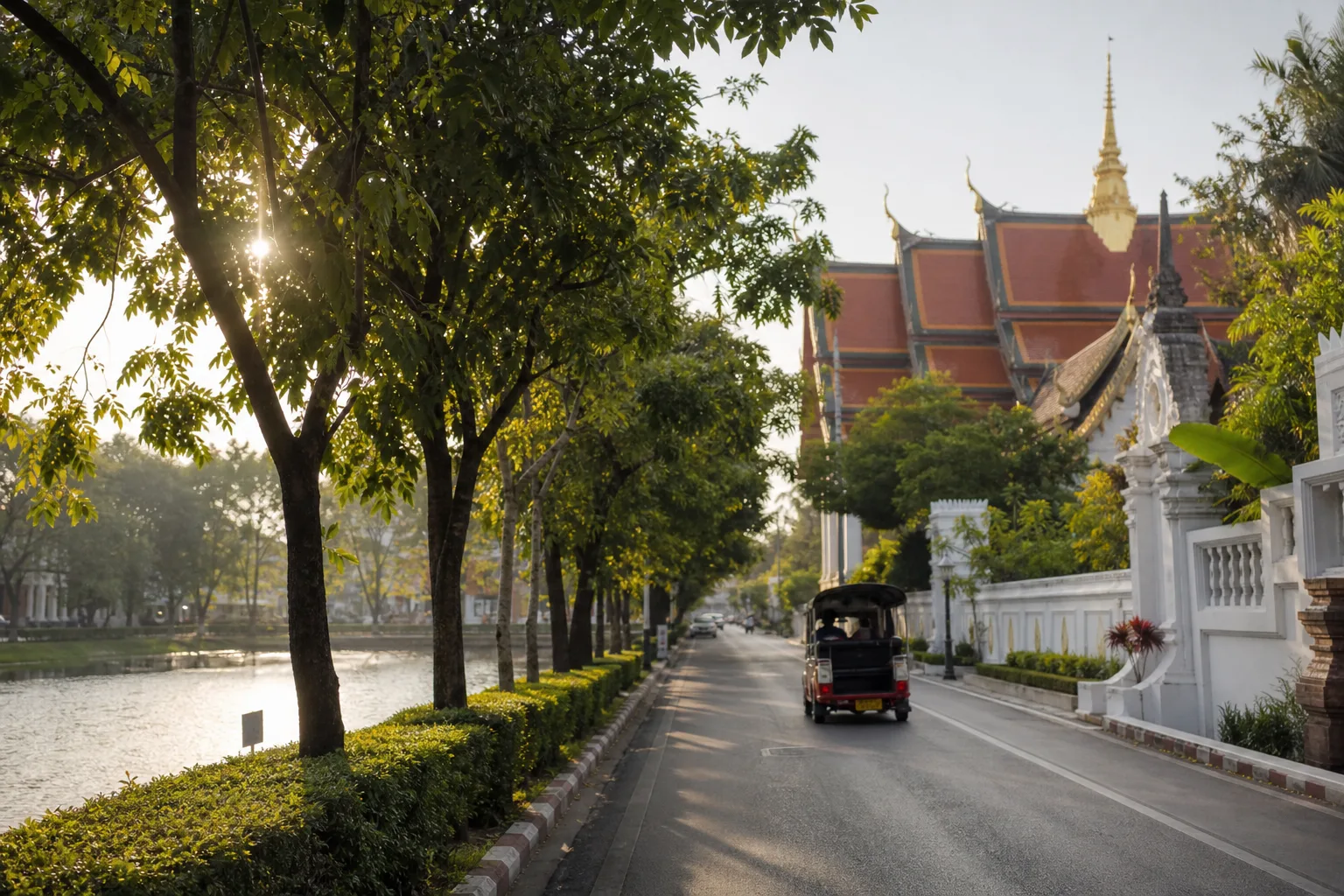
Chiang Mai’s historic heart is a near-perfect square moat, easy to navigate once you identify the main gates. Tha Phae Gate on the eastern side is the most recognised landmark and a natural meeting point. Beyond the old city, the Ping River curves to the east, while the trendy Nimmanhaemin area lies west, near the university. Doi Suthep mountain dominates the western skyline and provides a constant orientation reference. For a first-time visitor, staying within or just outside the moat offers the simplest walking access to temples, markets, and local eateries, but neighbourhoods further out can feel calmer and more residential.
Timing Your Visit and Managing the Climate
The cool season from November to February brings comfortable days and chilly evenings, making it the peak tourist period. March to May turns hot and often hazy due to agricultural burning; air quality can dip into unhealthy ranges, so sensitive travellers should pack N95 masks and monitor local AQI readings. The rainy season, roughly June to October, delivers afternoon downpours that rarely last all day, leaving the landscape lush and crowds thin. Local festivals like Yi Peng and Songkran draw huge domestic and international crowds, so book accommodation well ahead if your dates coincide. Always check official tourism websites for exact festival dates, as they shift annually based on the lunar calendar.
Navigating the City With Confidence
Chiang Mai lacks a metro or rail system, so most visitors rely on songthaews (red converted pickup trucks that operate as shared taxis), tuk-tuks, or ride-hailing apps. Songthaews follow loose routes and you simply flag one down, state your destination, and agree on a fare before boarding. For fixed prices and air-conditioned comfort, local ride-hailing services are widely used; download the relevant app and set up payment before arrival. Renting a scooter is popular but comes with real risk if you lack a valid motorcycle licence and international driving permit—police checkpoints are common, and insurance often excludes unlicensed riding.
Temple Etiquette and Respectful Conduct
You will encounter hundreds of temples, and a handful of rules apply everywhere. Dress modestly by covering shoulders and knees; some busy temples lend sarongs at the entrance, but carrying a light scarf gives you certainty. Remove shoes before entering any temple building, and step over the threshold rather than on it. Keep your head lower than Buddha images and monks, and if you sit, tuck your feet beneath you so they point away from sacred objects. Women should never touch a monk or hand anything directly to him—place offerings on the cloth provided. Quiet, calm behaviour inside temple grounds is expected, and avoid loud phone conversations.
Sampling the Local Food Scene Safely
Chiang Mai’s street food and market stalls are a highlight, but a cautious approach helps avoid stomach upsets. Eat at stalls with a high turnover of customers, where food is cooked to order in front of you. Stick to bottled or filtered water, and skip ice from unverified street vendors. The city’s signature dish, khao soi, is widely available; countless variations exist, so it’s worth trying a few. Night bazaars and weekend walking streets offer an overwhelming choice—arrive early to browse when it’s less crowded. Menus and food hygiene practices can change, so observe the stall before ordering and trust your instincts.
Day Trips and Outdoor Considerations
Popular excursions include Doi Inthanon National Park, ethical elephant sanctuaries, and hill tribe villages. Research any animal attraction carefully to ensure it aligns with genuine rescue or conservation principles; the term “sanctuary” is not regulated. Slip on sturdy shoes if you plan to hike to waterfalls or climb the naga staircase at Doi Suthep. Park entrance fees, opening hours, and trail conditions fluctuate with seasons and maintenance, so verify through official national park channels shortly before you set out. If you join an organised tour, confirm whether your group size is capped, what insurance is included, and whether the operator employs local guides.
Staying Healthy, Safe, and Accessible
Chiang Mai is generally safe for solo and family travellers, but petty theft can happen in crowded night markets—keep valuables out of back pockets. Tap water is not potable; refill stations for drinking water are common. Sidewalks in the old city are often narrow, uneven, or blocked by parked vehicles, making wheelchair and stroller access challenging. Many temples have steps with limited ramps, so visitors with mobility needs should inquire ahead. Mosquito-borne dengue occurs sporadically; use repellent and wear long sleeves at dawn and dusk. Hospital care is good in private hospitals, and travel insurance with evacuation coverage is strongly recommended.
Final Pre-Trip Verification Checklist
A few simple checks will save you hassle on the ground. Confirm your passport has at least six months’ validity and review the latest visa-exemption or visa-on-arrival rules for your nationality. Download offline maps and key local apps before you fly, as public Wi-Fi can be patchy. Notify your bank of travel plans to prevent card blocks. For temple visits, keep a light cover-up and slip-on shoes handy. E-sim and tourist sim options are plentiful at the airport or city shops, but plans and pricing change frequently—check current offers online. Finally, verify any attraction’s status, entry requirements, and operating days via its official website or a reliable local tourism information centre, as maintenance, holidays, or refurbishments can alter access without notice.
Keep exploring
About MyThai Editorial Team
Thailand-focused editors committed to practical, respectful and verifiable travel guidance.